
Cultivating the Mind: The Neurological Effects of Horticultural Therapy
Project Overview
Cultivating the Mind is a science communication project exploring the neurological and sensory effects of horticultural therapy. The project consists of a three-part educational poster series designed to communicate how interaction with plants can influence cognitive function, emotional regulation, and overall well-being.
Through a combination of scientific research, illustration, information design, and technical writing, this project translates complex biological concepts into accessible visual learning tools for a broad educational audience.
The final series examines horticultural therapy from multiple perspectives, beginning with an introduction to the therapeutic practice, followed by an exploration of sensory engagement, and concluding with the neurophysiological mechanisms associated with plant-based interventions.
The Challenge
Scientific concepts related to neuroscience and therapeutic interventions are often communicated through dense academic literature that can be difficult for non-specialists to access.
The goal of this project was to bridge the gap between scientific research and public understanding by transforming complex neurological concepts into clear, engaging visual narratives.
The challenge was balancing scientific accuracy with accessibility while maintaining a cohesive visual identity across all three educational posters.
Research and Process
The project began with an extensive review of literature related to horticultural therapy, sensory processing, neuroplasticity, and brain health.
Research findings were synthesized into key educational themes:
What horticultural therapy is and how it differs from recreational gardening
The role of sensory engagement in therapeutic outcomes
The neurological mechanisms underlying cognitive and emotional benefits
Information architecture was developed before visual design began. Content was organized into a logical progression, allowing viewers to move from foundational concepts to increasingly complex scientific ideas.
Custom illustrations, diagrams, and infographic elements were created to support comprehension while maintaining visual engagement. Particular attention was paid to hierarchy, readability, and educational clarity.
Final Outcome
The completed project consists of three interconnected educational posters:
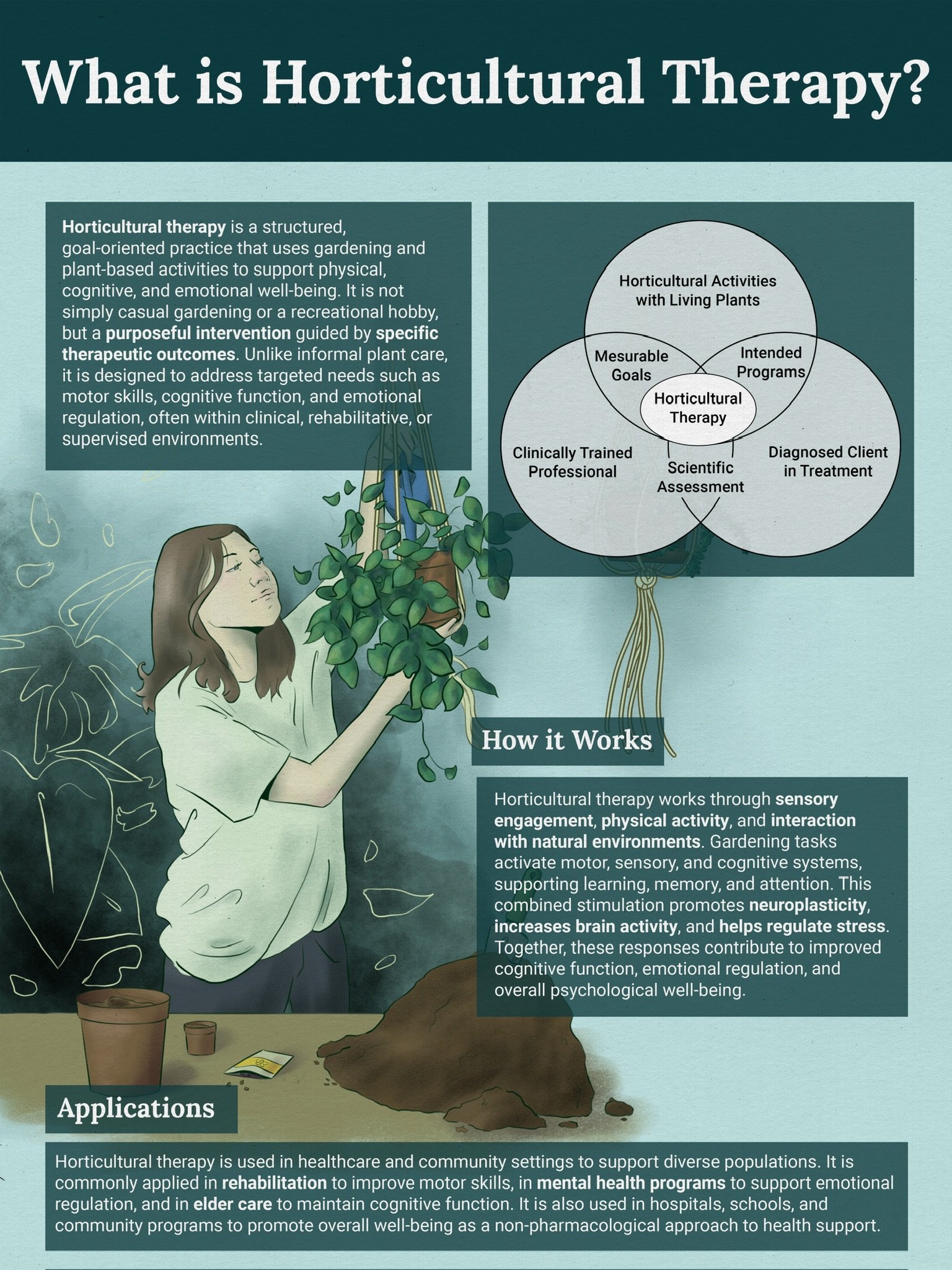
What is Horticultural Therapy?
An introductory poster defining horticultural therapy as a structured, goal-oriented therapeutic practice and explaining its applications within healthcare and rehabilitation settings.
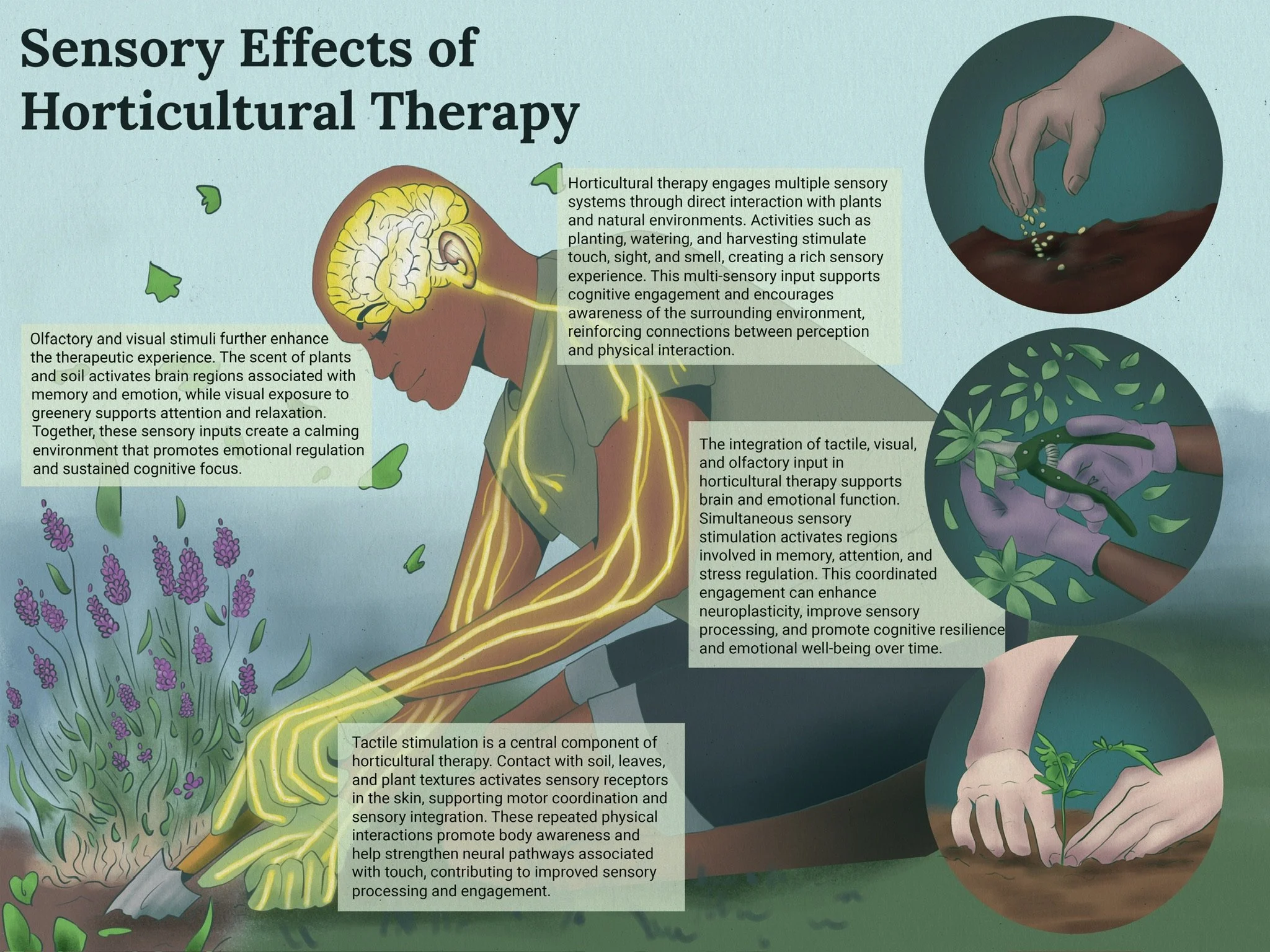
Neurophysiological Benefits of Horticultural Therapy
An exploration of neuroplasticity, neurotrophic signaling, vascular support, and brain function, demonstrating how therapeutic gardening activities may contribute to neurological well-being.
Together, the series transforms scientific research into approachable educational materials that support learning, engagement, and public understanding.
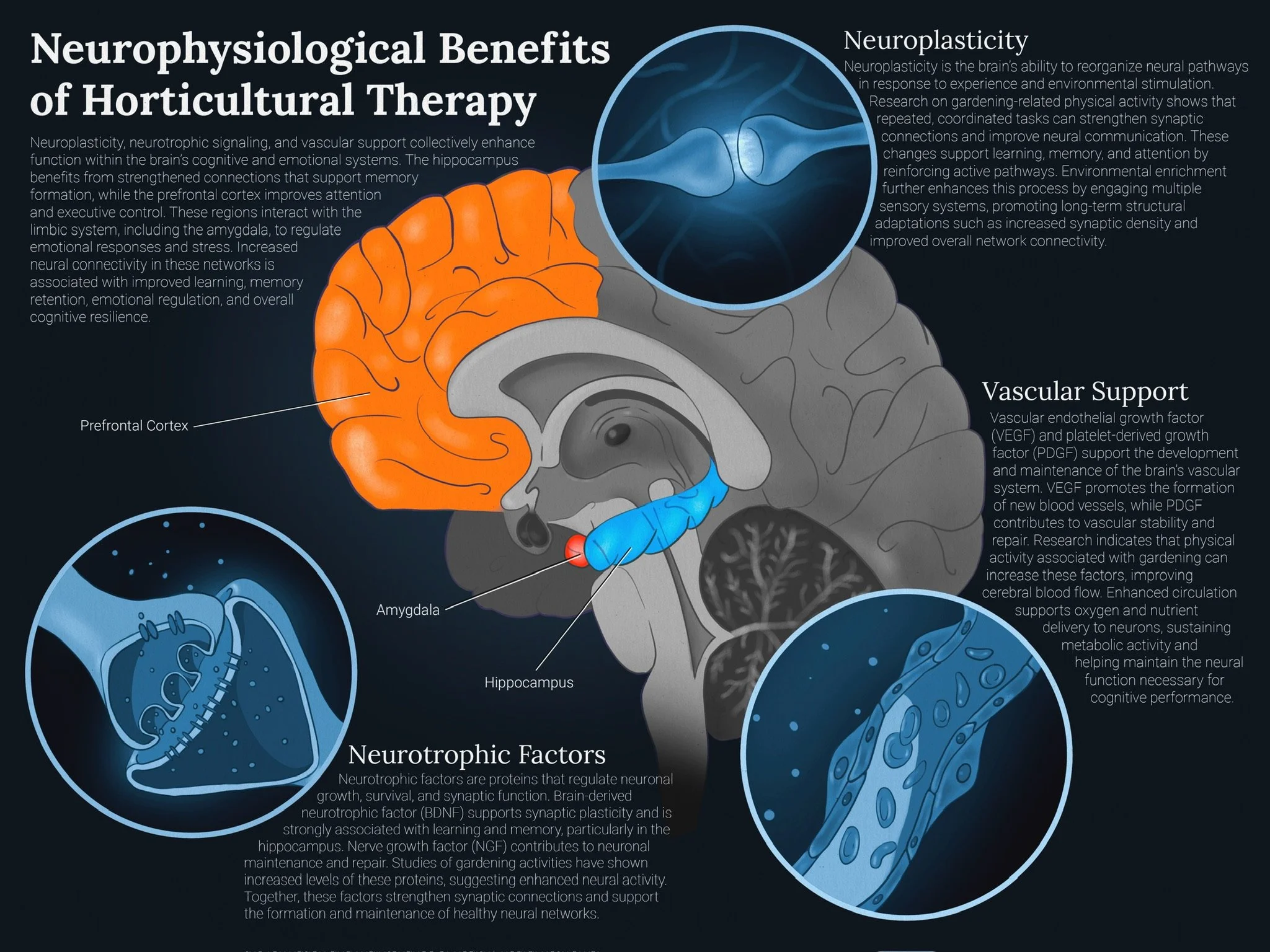
Sensory Effects of Horticultural Therapy
A visualization of how tactile, visual, olfactory, and environmental stimuli interact with sensory systems to influence cognitive and emotional processes.
Skills Utilized
• Scientific Communication
• Information Design
• Educational Content Development
• Technical Writing
• Literature Research
• Data Synthesis
• Visual Storytelling
• Adobe Illustrator
• Adobe Photoshop
• Layout Design
• Infographic Design
• Scientific Illustration