
Hallucigenia sparsa: Reconstructing an Extinct Cambrian Organism
Scientific Visualization • Paleoart • Digital Reconstruction
Project Overview
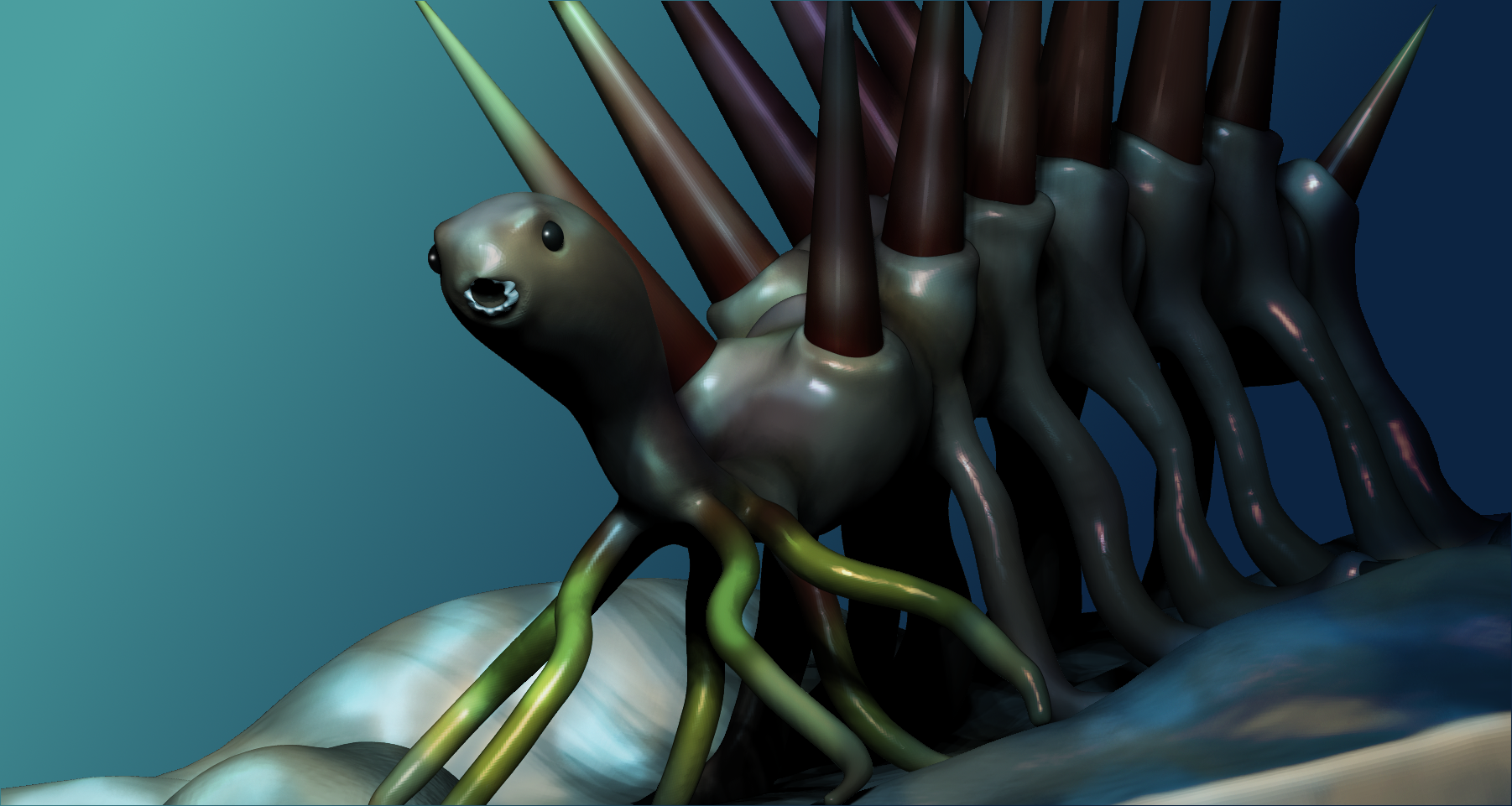
This project explores the scientific reconstruction of Hallucigenia sparsa, an extinct marine organism from the Cambrian Period. Known primarily through fossil evidence and historical reinterpretations, Hallucigenia presents a unique challenge for scientific visualization due to its unusual morphology and the evolving scientific understanding of its anatomy.
The goal of this project was to transform paleontological research into a three-dimensional reconstruction that communicates current scientific interpretations while presenting the organism as a living animal rather than a fossil specimen. Through a combination of scientific research, comparative anatomy, and digital sculpting, the project investigates how visual media can support public understanding of extinct life.
The Challenge
Unlike living organisms, extinct species cannot be directly observed. Scientific reconstructions must therefore rely on fossil evidence, published research, and informed anatomical interpretation.
Hallucigenia is particularly challenging because its anatomy has historically been misunderstood. Early reconstructions famously depicted the animal upside down, with features later reinterpreted as defensive spines rather than locomotory structures. Modern research has continued to refine scientific understanding of its body plan, appendages, and evolutionary relationships.
The challenge of this project was to synthesize these competing interpretations and create a reconstruction that was both scientifically informed and visually engaging.
Research
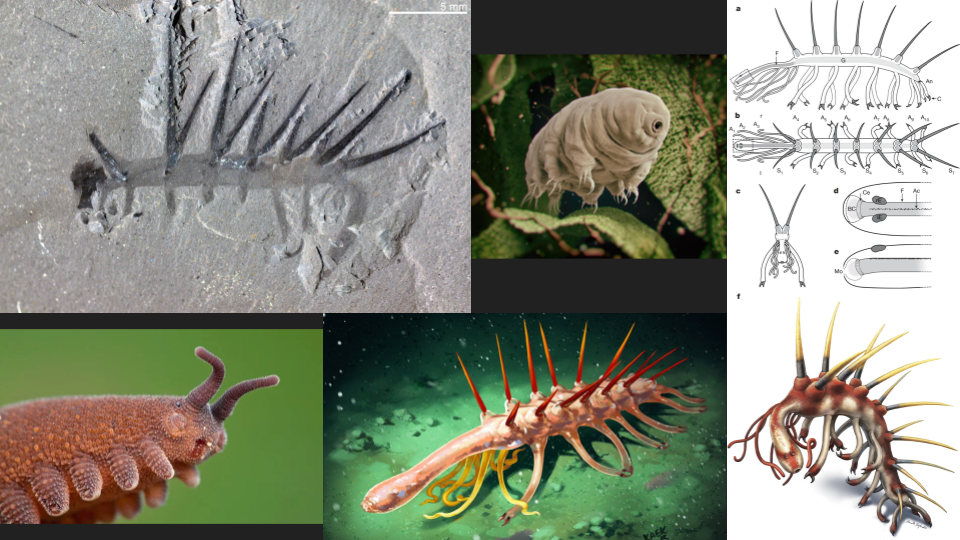
Research began with an examination of fossil specimens, scientific literature, and contemporary reconstructions of Hallucigenia sparsa. Particular attention was given to anatomical interpretations of:
Body segmentation
Defensive spines
Locomotory appendages
Head morphology
Ecological function
Because fossil preservation does not capture all anatomical information, comparative analysis was also conducted using extant organisms that share evolutionary or functional similarities. Studies of velvet worms, arthropods, and other invertebrates helped inform decisions regarding movement, soft tissue organization, and environmental interaction.
Research findings were compiled into visual reference boards that guided the reconstruction process and established a framework for anatomical decision-making.
Design & Reconstruction Process
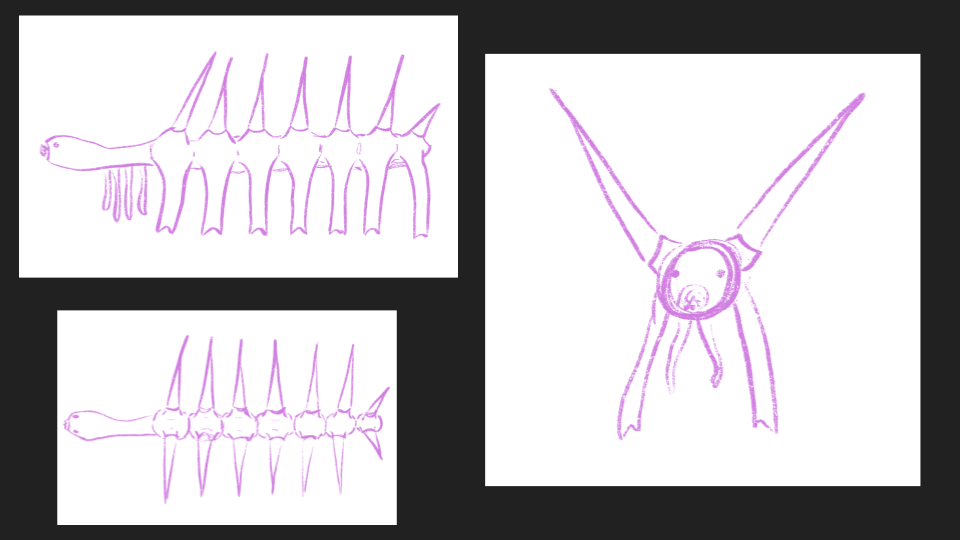
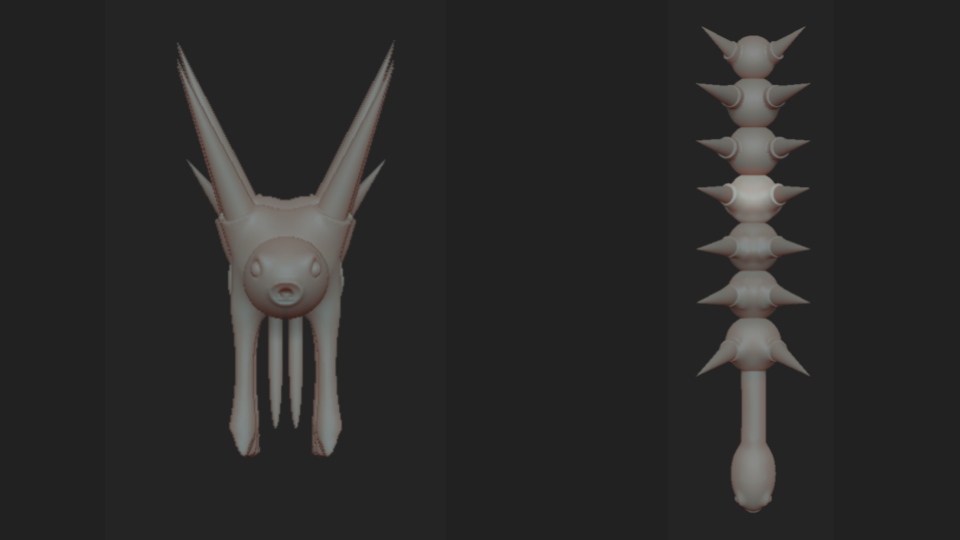
The reconstruction process began with exploratory sketches and silhouette studies to establish overall proportions and body organization. These early concepts allowed for experimentation with anatomical interpretations before digital modeling began.
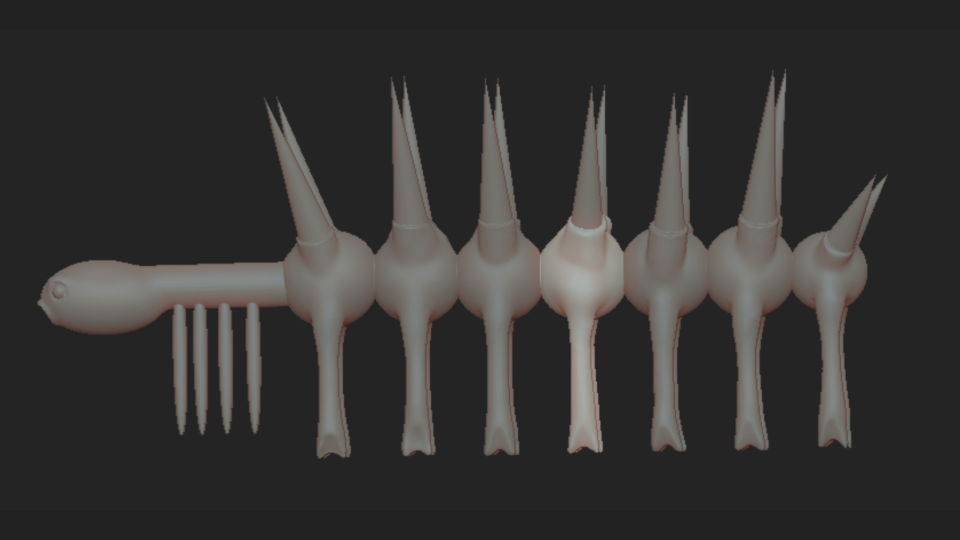
Using ZBrush, the organism was developed through a series of iterative stages:
Structural Development
The foundational body form was established first, focusing on segmentation, body proportions, and appendage placement. Particular attention was given to maintaining consistency with fossil evidence while creating a cohesive biological structure.
Anatomical Refinement
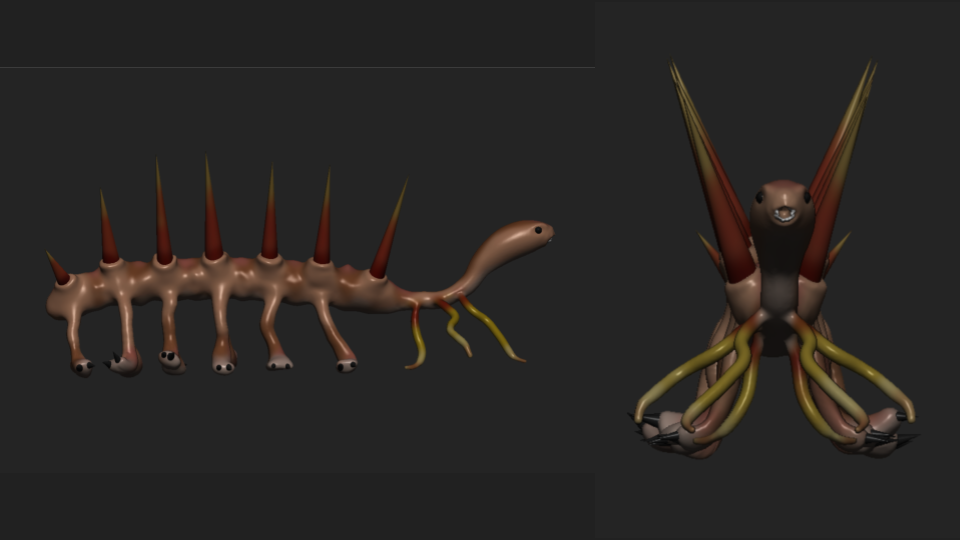
Subsequent stages focused on refining the defensive spines, locomotory appendages, and head region. Multiple adjustments were made to improve anatomical plausibility and visual readability while remaining grounded in available research.
Surface Detail & Form
Surface textures and subtle anatomical features were introduced to reinforce the impression of a living organism. These refinements helped bridge the gap between fossil evidence and biological visualization.
Environmental Context
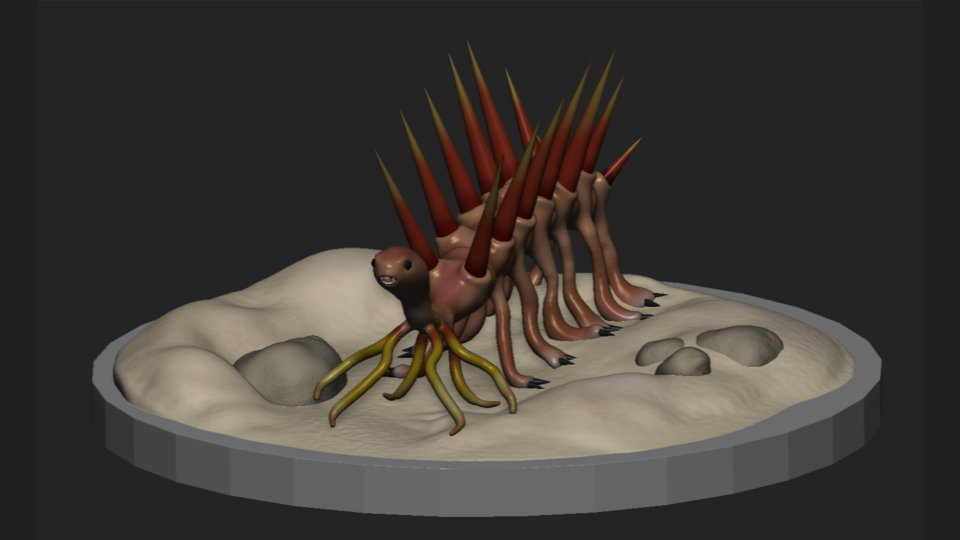
A supporting environment was developed to place the organism within a plausible ecological setting. This stage expanded the project beyond anatomical reconstruction and allowed the final presentation to communicate behavior, habitat, and scale.
Final Outcome
The completed reconstruction presents Hallucigenia sparsa as a living Cambrian organism rather than a static fossil specimen.
Hallucigenia sparsa Reconstruction
The final visualization communicates:
Current scientific interpretations of anatomy
Relationships between body structure and movement
Ecological context
The process of reconstructing extinct organisms from incomplete evidence
By transforming paleontological research into an accessible visual format, the project demonstrates how scientific visualization can bridge the gap between academic research and public understanding.
Reflection
This project strengthened my ability to synthesize information from multiple scientific sources and translate uncertain or incomplete evidence into a coherent visual narrative.
More broadly, it reinforced the role of scientific visualization as a tool for communicating evolving scientific knowledge. Rather than presenting reconstruction as an absolute fact, the project highlights how scientific understanding develops through ongoing interpretation, research, and discovery.
Skills Utilized
• Scientific Visualization
• Paleoart
• Digital Reconstruction
• Paleontology Research
• Comparative Anatomy
• Biological Interpretation
• ZBrush
• Environmental Design
• Research Synthesis
• Visual Storytelling
• Science Communication